

Anthropic Mythos explained
What it is, why it matters, and what matters now
Mythos (aka Claude Mythos Preview) is a frontier AI model developed by Anthropic. In plain English: this is an AI model that appears to be exceptionally capable at reading code and finding software weaknesses (aka vulnerabilities).
The reason it is getting attention is not marketing polish. It is the deployment decision: Anthropic has said it will not make Mythos generally available at this stage, and is instead limiting access to a carefully selected group of major technology and security vendors in a controlled programme called Project Glasswing.
The important thing to understand about Mythos is that using machine learning or AI models to assist in finding software weaknesses (aka vulnerabilities) is not new, and Mythos is not the only AI model that is capable of doing this however, Mythos takes this capability to its next level of evolution, with an enhanced ability to not only identify vulnerabilities across software, but also develop reliable exploits to take advantage of the vulnerabilities identified.
Back up, what are software vulnerabilities and exploits, and why do they matter?
At a basic level, a software vulnerability is a weakness in an IT system or software that a malicious actor can exploit to succeed in an attack. That weakness might be a coding mistake, a risky feature, a misconfiguration, or even user error.
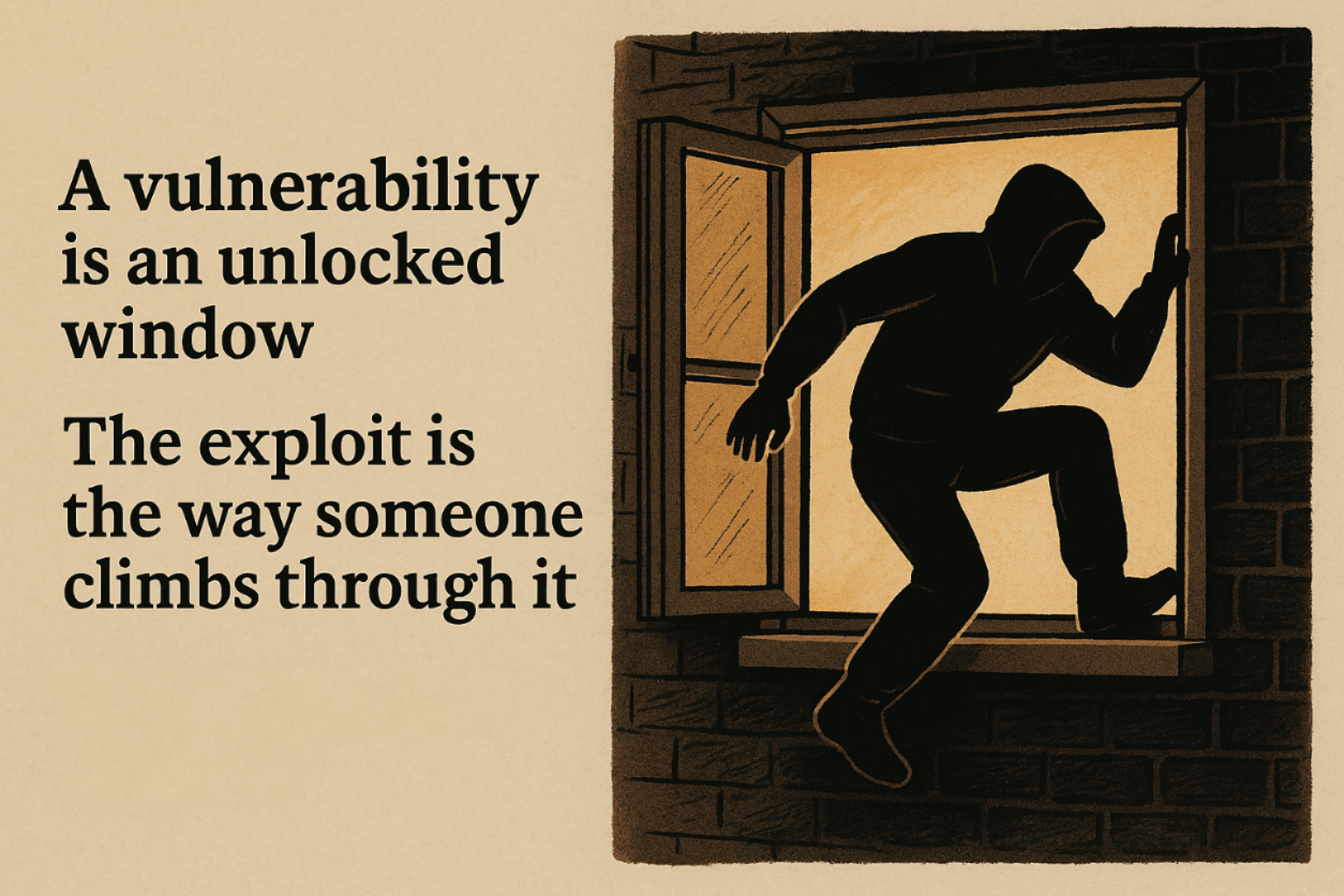
An exploit is the method used to take advantage of that weakness. In other words, the vulnerability is an unlocked window, the exploit is the way someone climbs through it. (Attackers often chain more than one vulnerability together to reach their end goal.)
Why it matters to any business owner:
- Vulnerabilities are common, even in well-known products, and once they are known, attackers look for organisations that have not fixed them yet.
- The fix is often a software update (a “patch”). If you delay updates, you are leaving known security holes open.
- The business impact is practical, not theoretical: compromised accounts, stolen data, ransomware, downtime, reputational damage, and potential regulatory fines.
Why should business owners care about Mythos?
Most small businesses will not be end users of Mythos. That’s not the point.
The key point here is how frontier AI models, such as Mythos, are changing the economics and speed around how quickly software vulnerabilities are discovered, and the speed at which these can be translated into active exploits used by malicious actors.
Anthropic reports that Mythos Preview has already found several high-severity vulnerabilities across major operating systems (such as Windows and Linux) and web browsers (although many of these are not publicly available under responsible disclosure practices to allow the vendors to develop and release fixes).
The direction of travel is clear: the time window between a weakness being discovered and being used is shrinking, whilst simultaneously the volume of issues being found is rising.
This will impact businesses of all sizes in 3 key areas:
- Security patching discipline is thrust into the foreground – As weaknesses are found faster, organisations that patch slowly carry more residual risk to potential attack.
- Supplier and software dependency risks increase (again) – Attacks are often driven by third parties: cloud platforms, SaaS tools, payment services, MSPs, web browsers and open-source software components.
- Governance questions must move to the boardroom – Business leaders will be asked, “Are we keeping pace with vulnerabilities?” and “What would we do if a critical supplier issue hit us tomorrow?”.
The real-world impact will vary by industry. For software developers and software-led firms, this is a prompt to tighten the secure development lifecycle, particularly around dependency management, patch development and release speed. For professional services, the priority is resilience: faster exploitation means you need clearer security habits and sharper internal comms, so the business can respond quickly without disruption when AI‑enabled threats show up.
What’s the takeaway for business leaders and tech managers?
The key takeaway here is: if nothing else, aim to reduce the gap between discovery, fix availability, and fix implementation.
At a practical level, this will involve business leaders understanding and getting clarity in a few key areas:
1. Get Clarity on what you actually run
If you don’t already have a full and up-to-date inventory of your:
- Devices: Laptops, Smartphones, Servers, etc.
- Cloud Services and SaaS tools
- Websites and Domains
- Key suppliers and Integrations
Then it’s time to develop or update this list: You cannot patch what you don’t know exists. Also, ensure that you have a reliable method of detecting software vulnerabilities within your business, such as using a Vulnerability scanning tool.
2. Tighten security fixes and patches, especially on internet-facing systems
Set patch expectations based on severity and exposure across your own systems, third parties and key suppliers. Use a recognised benchmark such as Cyber Essentials, which expects critical or high-risk updates to be applied within 14 days of release.
The key challenge is governance: patching performance and exceptions should be reported and owned at the board level, not left as an “IT-only” activity behind closed doors, or left with an MSP.
3. Apply the same requirements to your suppliers
Even if your business is managing vulnerabilities robustly, is this being applied across your supply chain? Ask your critical vendors and suppliers:
- How quickly do you patch critical issues?
- How do you notify customers?
- What’s your incident response process, and critically, when was it last practised?
- Ensure you are ready for an incident
Having a plan is one thing, but when was the last time you really rehearsed it across the business? Take a look at your incident response plan and ask: Who decides to take systems offline? Who contacts customers? How do you keep trading? A short tabletop exercise is often enough to expose gaps.
4. Consider a certification route to formalise discipline
For many smaller businesses, Cyber Essentials (and Cyber Essentials Plus) provides a pragmatic baseline. If you need stronger customer assurance, ISO/IEC 27001 can be a longer-term option, depending on size and market expectations.
In Summary:
TL; DR (too long; didn’t read): Tools like Anthropic’s Mythos are a signal that finding software weaknesses is getting faster, which means businesses need to get sharper at the basics. Know what you run, keep systems updated, lock down access, and make sure you can recover quickly if something goes wrong.
Busy running the business?
If you’d like a practical, proportionate plan (or need customer-ready evidence like Cyber Essentials or ISO/IEC 27001 readiness), we can help.
Comments are closed